
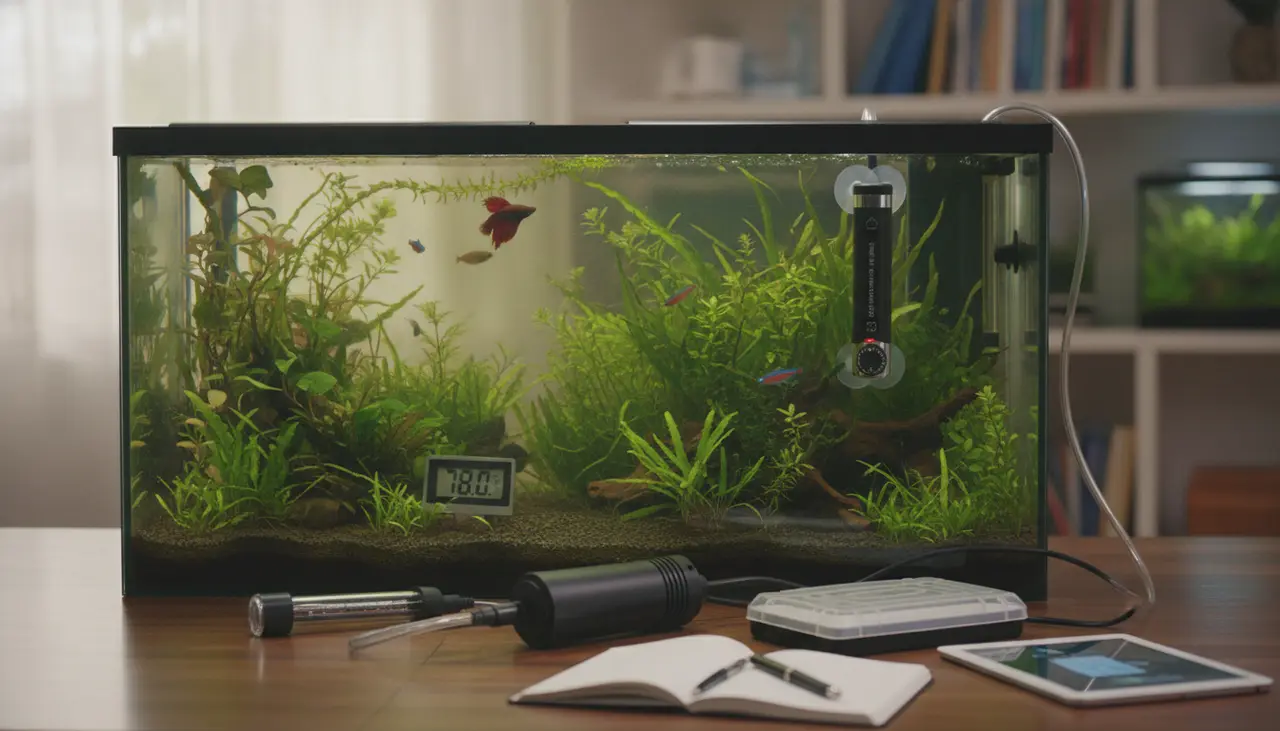
Aquarium Heaters 101: How to Choose the Best Aquarium Heater for a Stable Tank
Disclosure: This post contains affiliate links. As an Amazon Associate and a partner with specialized aquatic retailers, I may earn a commission from qualifying purchases at no additional cost to you.
The "best" aquarium heater is one that provides consistent, stable heat tailored to your specific tank volume while incorporating safety shut-offs to prevent catastrophic failure. For most home hobbyists, a high-quality glass submersible heater with a calibrated thermostat or a heavy-duty titanium heater paired with an external controller offers the most reliable protection against temperature swings.
The Heartbeat of Your Tank: Why Temperature Stability Matters
As "fish parents," we strive to create a sanctuary that mimics nature. In the wild, large bodies of water change temperature very slowly. In our homes, however, a 20-gallon or 55-gallon tank can lose heat rapidly if the room gets chilly, or overheat if a heater malfunctions.
Choosing the best aquarium heater isn't just about reaching a number on a dial; it’s about safety and reliability. A failed heater is one of the most common causes of "tank crashes," either by "cooking" the water or allowing it to drop to levels that suppress the immune systems of your fish. This guide is designed to help you find a heater that fits your busy lifestyle, providing peace of mind so you can enjoy your view without constant worry.
Quick Comparison: Popular Heater Types
| Heater Material | Best Use Case | Durability | Safety Feature | | :--- | :--- | :--- | :--- | | Glass (Submersible) | General community tanks | Moderate (can break) | Auto-shutoff when dry | | Titanium | Large tanks / Aggressive fish | High (unbreakable) | Requires external controller | | Plastic/Polymer | Small/Medium tanks | High (shatterproof) | Thermal switch | | In-Line | High-end canister setups | High (out of tank) | Overheat protection |
Selecting the Best Aquarium Heater for Your Setup
When you are optimizing your home aquarium setup, the heater is a primary tech component that requires careful selection based on your tank's environment.
#### Best for Precision and Value: Glass Submersible Heaters Glass heaters, such as the Eheim Jager, have been a hobbyist staple for decades. They are made of laboratory-grade glass and are often fully submersible.
- Pros: Highly accurate thermostats; usually the most affordable option.
- Trade-offs: Glass can crack if bumped by heavy decor or if removed from the water while still hot.
- Ideal for: Homeowners with peaceful community fish like Tetras or Guppies.
#### Best for Durability: Titanium Heaters If you have large, boisterous fish (like Oscars) or a saltwater reef, titanium is the gold standard. Brands like Finnex or those found at Bulk Reef Supply offer these "unbreakable" options.
- Pros: Cannot shatter; extremely efficient heat transfer.
- Trade-offs: Most do not have built-in thermostats and must be used with an external temperature controller.
- Ideal for: Large systems and hobbyists who want an extra layer of redundant safety.
#### Best for Modern Features: Digital Smart Heaters The Fluval E-Series is a prime example of a heater designed for the modern home. It features an integrated LCD screen that changes color if the temperature fluctuates outside a safe range.
- Pros: Real-time temperature display; protective guard to prevent fish burns.
- Trade-offs: Can be more sensitive to low flow rates.
- Ideal for: Living room tanks where you want a quick visual confirmation that everything is okay.
The "Golden Rule" of Heater Wattage
A general rule of thumb is 3 to 5 watts of power per gallon of water.
- If your room is consistently cold, lean toward 5 watts per gallon.
- For a 20-gallon tank, a 75W or 100W heater is usually perfect.
- Pro Tip: For large tanks (55+ gallons), consider using two smaller heaters instead of one large one. If one fails "on," it is less likely to overheat the tank before you notice. If one fails "off," the other can prevent a total temperature crash.
Common Beginner Mistakes to Avoid
- Not Calibrating: Many heaters have a dial, but the number on the dial might not match your thermometer. Always verify with a secondary digital thermometer.
- Placing in "Dead Zones": If there is no water flow around the heater, it will create a warm pocket of water, shut off prematurely, and leave the rest of the tank cold. Place your heater near your filter intake or a powerhead.
- The "Dry Burn": Never pull a heater out of the water during a water change while it is plugged in. The glass can shatter or the internal components can fry instantly.
- Forgetting the Drip Loop: Always ensure your power cord has a "drip loop" so water cannot travel down the wire and into your wall outlet.
Maintenance Routines for Longevity
To keep your heater running safely, include these steps in your monthly maintenance:
- Unplug first: Always wait 10–15 minutes after unplugging before touching the heater.
- Check for Calcium Buildup: In hard water tanks, crusty white buildup can insulate the heater and make it work harder. Gently wipe it down with a vinegar-soaked cloth.
- Inspect the Cord: Look for signs of wear or brittleness, especially in older units.
Frequently Asked Questions
Can an aquarium heater touch the gravel or sand? It is generally best to keep the heating element (the part that gets hot) away from the substrate. Buried heaters can cause the glass to overheat and crack or create "hot spots" in the sand.
How long do aquarium heaters last? Most experts recommend replacing your heater every 2–3 years as a preventative measure. The internal relay switches that turn the heater on and off eventually wear out.
What is an external temperature controller? An external controller (like an Inkbird) acts as a "safety net." You plug your heater into the controller, and the controller into the wall. If the heater's internal thermostat fails and tries to stay on indefinitely, the controller will cut the power once the set temperature is reached.
Final Thoughts
Your aquarium is a living investment, and the heater is its life support. While it might be tempting to save a few dollars on a generic brand, investing in a reliable, well-reviewed heater—and perhaps a redundant controller—is the best way to ensure your aquatic family stays warm, safe, and stress-free.