
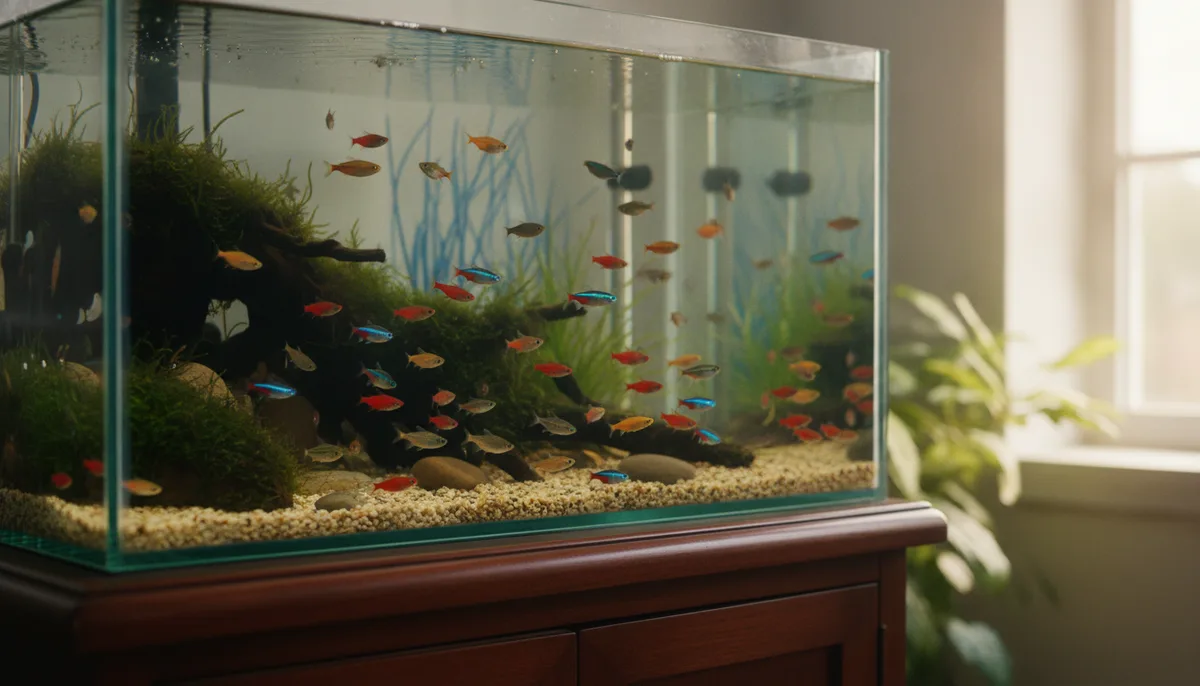
Beyond Tetras: The Ultimate Guide to the Best Rasboras for Your Aquarium
When most hobbyists envision a bustling community aquarium, their minds often drift toward the neon glow of South American tetras. However, for those looking to explore the lush, tea-colored streams of Southeast Asia, the world of rasboras offers an equally stunning and diverse alternative.
While they share the torpedo-shaped bodies and peaceful temperaments of their characin cousins, rasboras belong to the family Cyprinidae. The common name "rasbora" is actually a catch-all term for several distinct genera, including Trigonostigma, Boraras, and Microdevario. Whether you are looking for a hardy centerpiece school or tiny jewels for a nano scape, there is a rasbora perfectly suited for your setup.
The Classic Schoolers: The Trigonostigma Trio
The most recognizable rasboras in the hobby belong to the Trigonostigma genus. These fish are characterized by their deep, diamond-shaped bodies and a striking black "wedge" or triangle on the posterior half of their bodies.
1. Harlequin Rasbora (Trigonostigma heteromorpha)
The Harlequin Rasbora is a staple of the hobby for a reason. Reaching about 2 inches (5 cm), they are incredibly hardy and adapt well to a variety of water conditions. Their copper-orange bodies provide a warm glow that looks spectacular under Best LED Aquarium Lighting for Planted Tanks: Budget vs. Professional Grade.
2. Lambchop Rasbora (T. espei)
Often confused with the Harlequin, the Lambchop is slightly smaller and slimmer. Its orange coloration is often more intense—almost a neon glow—and the black marking is shaped more like a "lambchop" than a solid triangle.
3. Glowlight Rasbora (T. hengeli)
The smallest of the trio, the Glowlight Rasbora features a translucent body with a thin, electric orange line tracing the top of its black marking. When kept in a large school, they create a shimmering effect that is subtle yet mesmerizing.
For those interested in expanding their colony, these species are unique among rasboras because they are not simple egg-scatterers; they prefer to attach their eggs to the underside of broad-leafed plants. To learn more about the mechanics of fish reproduction, see our guide to Master the Art of Breeding Egg Scatterers: A Guide for Tetras, Danios, and Barbs.
The Boraras Brigade: Tiny Jewels for Nano Tanks
In recent years, the "nano tank" trend has skyrocketed, and the Boraras genus has become the star of the show. These micro-rasboras rarely exceed one inch in length, making them the perfect inhabitants for Best Rimless Aquariums for a Modern Home Aesthetic.
4. Chili Rasbora (Boraras brigittae)
The Chili Rasbora is perhaps the most sought-after nano fish. When settled into a well-planted tank with soft, slightly acidic water, the males turn a deep, ruby red that is unmatched by almost any other freshwater fish.
5. Phoenix Rasbora (Boraras merah)
Similar to the Chili, the Phoenix Rasbora features a red body but is distinguished by a black spot surrounded by a bright orange halo on its side. They are peaceful, timid, and require a school of at least 10 to feel safe.
6. Dwarf Rasbora (Boraras maculatus)
The Dwarf Rasbora is a bit hardier than the Chili and features three distinct black spots on a reddish-pink body. They are an excellent choice for 5-gallon setups where you want a splash of color without a heavy bioload.
7. Exclamation Point Rasbora (Boraras urophthalmoides)
Named for the black line and dot on their caudal peduncle that resembles an exclamation point, these fish are incredibly small and slender. They thrive in "blackwater" setups with plenty of tannins and leaf litter.
Specialized Gems: Unique Colors and Sizes
Beyond the common triangles and micro-reds, there are rasboras that break the mold with unique colors and larger profiles.
8. Kubotai Rasbora (Microdevario kubotai)
Also known as the Neon Green Rasbora, this fish is one of the few species that displays a truly fluorescent green color naturally. They are high-energy swimmers that prefer the top and middle layers of the tank. To keep them healthy, ensure your water is well-oxygenated and keep them in a group of at least 8 to 12.
9. Scissortail Rasbora (Rasbora trilineata)
If you have a larger aquarium (30 gallons or more), the Scissortail Rasbora is a fantastic choice. Growing up to 5 inches, they are named for the way they twitch their deeply forked tails, which feature a distinct black and white pattern. They are active, sleek, and provide a sense of scale to larger community tanks.
10. Black Line Rasbora (Rasbora borapetensis)
This species features a silver body with a bold black stripe running from the gill to the tail, highlighted by a shimmering gold line directly above it. They are exceptionally hardy and act as a great "dither fish" for more shy species.
Designing the Ideal Rasbora Habitat
To see your rasboras at their best, you must consider their natural environment. Most species originate from slow-moving streams and peat swamps in Southeast Asia.
Water Parameters
While many rasboras (especially Harlequins) are adaptable, they generally prefer:
- Temperature: 72–82°F (22–28°C)
- pH: 6.0–7.5 (Micro species like Chilis prefer the lower end)
- Hardness: Soft to moderately hard water
Aquascaping for Color
Rasboras can look "washed out" in a bare tank with bright substrate. To bring out their deep reds and greens, use a dark substrate like CaribSea Eco-Complete Planted Aq... or. Thick vegetation, such as Cryptocoryne and Java Fern, provides the hiding spots they need to feel secure enough to display their best colors.
Nutrition and Feeding Strategies
Rasboras are micro-predators, meaning their natural diet consists of small insects, larvae, and zooplankton. In the home aquarium, the challenge is often the size of their mouths—especially for the Boraras species.
- Dry Foods: Use high-quality crushed flakes or specialized micro-pellets like.
- Live/Frozen Foods: To trigger spawning behavior and enhance coloration, offer live baby brine shrimp, daphnia, or frozen cyclops.
- Color Enhancement: Foods containing astaxanthin or spirulina will help intensify the reds of Chili and Harlequin rasboras.
Compatibility and Health
Rasboras are the quintessential community fish. They lack the "nippy" reputation of some tetras or the aggressive drive of certain barbs.
Ideal Tank Mates:
- Dwarf Gouramis and Honey Gouramis
- Corydoras and Kuhli Loaches
- Peaceful small tetras (like Neons or Ember Tetras)
- Dwarf Shrimp (with caution for larger rasbora species)
While generally hardy, rasboras can be sensitive to sudden shifts in water quality. They are also susceptible to common ailments like Ich or velvet if stressed. Always quarantine new arrivals. If you notice signs of lethargy or sores, it is vital to act quickly; for more on identifying serious conditions, read our guide on Understanding Hole-in-the-Head Disease: Causes, Treatment, and Long-Term Prevention.
Conclusion: Why Choose Rasboras?
Rasboras offer a sophisticated elegance to the freshwater aquarium. Whether it is the rhythmic "scissoring" of a Rasbora trilineata or the glowing orange wedge of a Harlequin, these fish bring a slice of Southeast Asian ecology into your home. They are peaceful, social, and—when cared for correctly—among the most vibrant inhabitants you can keep.
If you are looking for a fish that combines the energy of a Zebra Danio with the delicate beauty of a tetra, the rasbora family is waiting to be explored. Start with a school of 10, provide plenty of plants, and watch as your aquarium transforms into a living jewel box.