
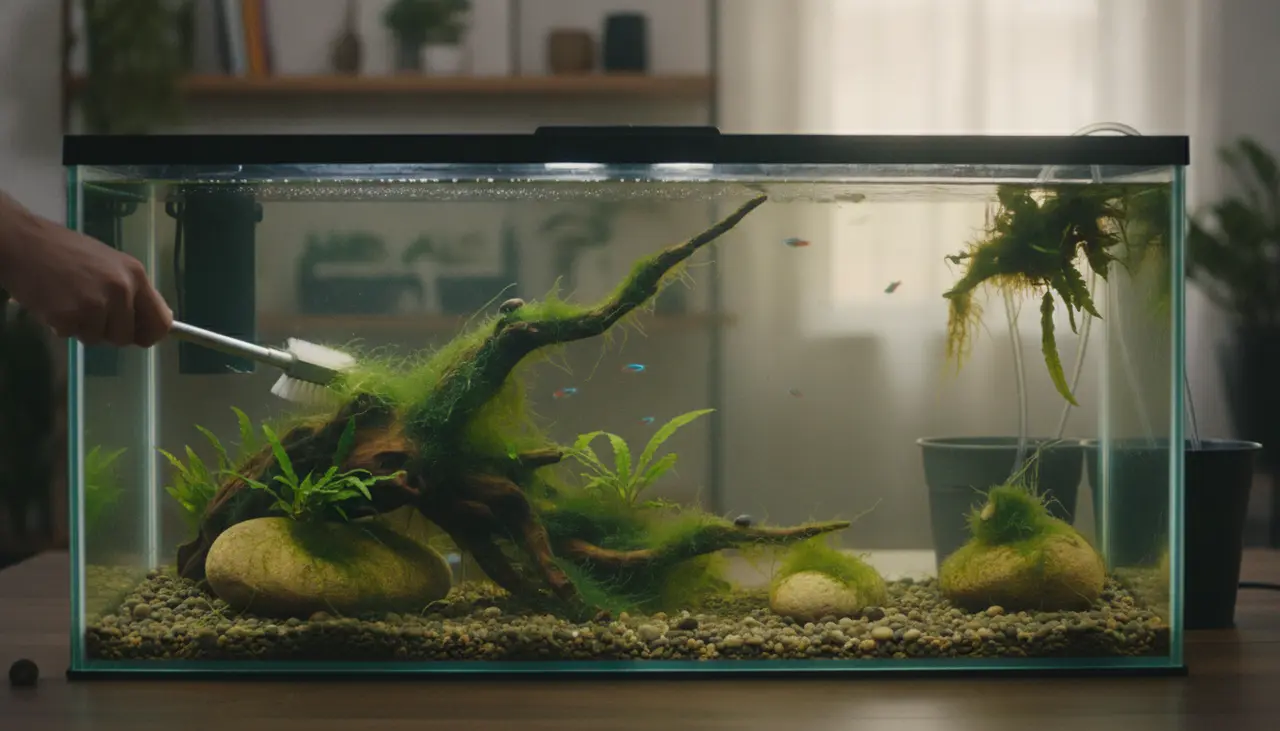
Controlling Green Hair Algae: A Supportive Guide to Reclaiming Your Tank
Disclosure: This post contains affiliate links. If you click through and make a purchase, I may earn a commission at no additional cost to you. As an Amazon Associate, I earn from qualifying purchases.
If you’ve walked into your living room only to find your beautiful aquascape draped in what looks like green shag carpeting, please take a deep breath. You aren't a "bad" fish parent, and your tank isn't ruined. Green hair algae (GHA) is one of the most common—and admittedly most frustrating—challenges in the home aquarium hobby.
To get rid of green hair algae, you must implement a three-pronged strategy: physically remove the existing growth, limit the light and nutrients fueling the outbreak, and optimize your filtration to prevent its return. While there is no "magic pill," a few consistent, small changes to your weekly routine will help you win the battle without it feeling like a second full-time job.
Who This Guide Is For
This guide is specifically designed for the home hobbyist who balances a busy life with their love for aquatic pets. Whether you are a beginner seeing your first "fuzz" or a seasoned keeper dealing with a persistent outbreak in a 55-gallon community tank, these steps focus on realistic management rather than impossible perfection.
---
Understanding the Algae Control Toolkit
Before we dive into the manual steps, it’s helpful to know which tools are actually worth your time and investment. Not every tank needs every gadget, but some can significantly lighten your maintenance load.
| Tool Type | Primary Function | Best For | Trade-off | | :--- | :--- | :--- | :--- | | Manual Scrapers & Brushes | Physical removal of visible clumps | Immediate aesthetic improvement in any tank | Labor intensive; does not solve the root cause. | | UV Sterilizers | Neutralizes free-floating algae spores | Preventing new outbreaks and "green water" | Requires an initial investment and periodic bulb changes. | | Algae-Eating Crew | Continuous grazing on new growth | Planted tanks or community setups (Amano shrimp, snails) | Adds to the biological load; may not eat long, tough strands. | | Phosphate Absorbers | Chemical filtration of algae "fuel" | High-nutrient tanks or those with heavy fish loads | Requires regular media replacement to remain effective. |
---
Step 1: Manual Removal (The "Great Cleanup")
The first step to get rid of green hair algae is to physically take it out. This reduces the sheer volume of organic matter the tank has to process.
- The Toothbrush Trick: Use a new, clean toothbrush to "twirl" the algae like spaghetti. This is incredibly effective for pulling clumps off of slow-growing plants like Anubias or driftwood.
- Siphon as You Go: When you are scrubbing or pulling algae, try to do it during a water change. Keep your siphon hose near the area you are cleaning to suck up the loose fragments before they settle elsewhere.
- Don't Stress Perfection: You won't get every strand in one sitting. Aim for 70-80% removal. Your goal is to give your plants and beneficial bacteria a "breathing room" advantage.
Step 2: Starve the Algae (Light and Nutrients)
Algae thrives on two things: Light and excess nutrients (specifically Nitrates and Phosphates).
- Adjust Your Photoperiod: Most home aquariums only need 6-8 hours of light. If your tank is near a window or your lights are on for 10+ hours, the algae will always win. Consider a timer to keep things consistent. For more on managing your environment, check out our guide on the Best LED Aquarium Lighting for Planted Tanks: Budget vs. Professional Grade.
- Mind the Feeding: It’s easy to overfeed because we love seeing our fish eat. However, uneaten food breaks down into the very nutrients GHA loves. Try "fasting" your fish one day a week—it’s actually healthy for their digestive systems!
- Water Changes: Stick to a realistic weekly or bi-weekly schedule. Removing 20-30% of the water helps export the nitrates that act as fertilizer for the hair algae.
Step 3: Optimize Your Filtration & Water Tech
Your filter is the heart of your tank's ecosystem. If it’s clogged or undersized, nutrients build up quickly.
If you are struggling with recurring outbreaks despite good cleaning habits, your filtration might need an upgrade. A quiet, efficient filter ensures that water is constantly moving and being processed. You can explore some of the top-rated options in our review of The Best Quiet Aquarium Filters for a Peaceful Living Room.
The Role of UV Sterilizers: For many hobbyists, a UV sterilizer is the "secret weapon." While it won't kill the long hair algae already attached to your rocks, it kills the free-floating spores in the water column. This stops the algae from spreading to new surfaces. It’s a fantastic "set it and forget it" tool for the busy homeowner.
---
Common Beginner Mistakes
- The "Scrub Everything" Panic: Beginners often take out all the decorations and scrub them in hot tap water. This can accidentally kill the beneficial bacteria living on those surfaces, leading to an ammonia spike. Always use dechlorinated tank water for cleaning.
- Over-reliance on Chemicals: "Algae-away" liquids can be a temporary fix, but they often cause the algae to die off so fast that the resulting decay crashes your oxygen levels. It’s better to fix the balance than to use a chemical band-aid.
- Adding Too Many Algae Eaters: Buying six Siamese Algae Eaters for a 10-gallon tank creates a new problem: too much waste. Always check the adult size and bioload of your "clean-up crew" first.
---
Summary Checklist for Success
- [ ] Manually remove large clumps using a toothbrush or tweezers.
- [ ] Reduce light duration to 7 hours per day.
- [ ] Perform a 25% water change, vacuuming the substrate thoroughly.
- [ ] Test your water for high Phosphates (aim for near zero).
- [ ] Consider adding a UV sterilizer if the problem persists.
FAQ
Will green hair algae kill my fish? No, GHA isn't toxic to fish. In fact, some small fry love to hide in it! However, it can choke out your live plants and, if it gets too thick, it can trap small inhabitants like shrimp.
Why did it appear suddenly in my established tank? Usually, it’s a change in the "input vs. output" balance. Maybe your tap water source changed, your light bulb is getting old and shifting spectrum, or you’ve been a little more generous with the fish flakes lately.
How long does it take to get rid of it? Expect to see a real difference in 2 to 4 weeks. Consistency is more important than a single "deep clean."
Managing a home aquarium is a journey of balance. If you're looking to refine your entire approach to gear and maintenance, our The Tank Keeper’s Master Buying Guide: Optimizing Your Home Aquarium Setup is a great place to start. Remember, the goal is a peaceful environment for both you and your fish—don't let a little green fuzz steal your joy!