
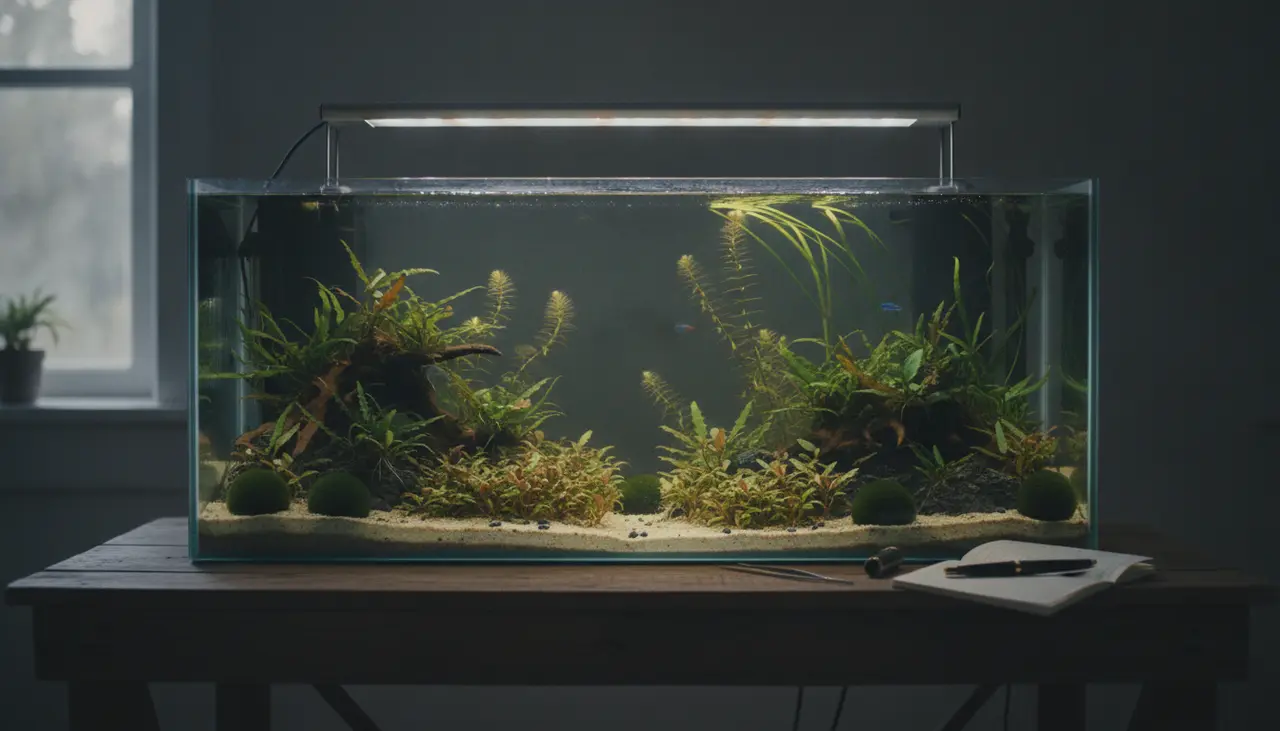
Low-Light Plants That Are Hard to Kill: A Busy Hobbyist’s Guide
Disclosure: This post contains affiliate links. If you click through and make a purchase, I may earn a commission at no additional cost to you. I only recommend products and vendors that align with The Tank Keeper’s standards for quality and reliability.
We’ve all been there: you see a photo of a breathtaking, lush "high-tech" aquarium and think, I want that. Then you see the price tag for the pressurized CO2 systems, the specialized soil, and the high-intensity lighting—not to mention the hours of pruning required every weekend. For those of us balancing a career, a family, and a home, that level of commitment isn't always realistic.
The good news? You don't need a professional-grade laboratory setup to have a beautiful, living ecosystem. Some of the most stunning aquatic plants are actually the most "stubborn" survivors.
The Direct Answer: What are the best low light aquarium plants?
The best low light aquarium plants for hobbyists with busy schedules are Anubias, Java Fern, and Cryptocoryne. These species are exceptionally hardy because they have slow metabolic rates, meaning they don't require intense light or constant fertilization to thrive.
These plants are often referred to as "unkillable" because they can survive in standard "kit" lighting and are forgiving if you miss a weekly liquid fertilizer dose. If you want a green tank without the green-thumb stress, focusing on "epiphytes" (plants that grow on wood or rocks) and hardy root-feeders is the most sustainable path forward.
---
Who This Guide Is For
This guide is specifically for the home hobbyist who wants a peaceful, natural-looking tank but lacks the time for daily "gardening." If you are looking for plants that:
- Thrive in standard LED lighting.
- Don't require CO2 injection.
- Can handle slight fluctuations in water parameters.
- Require minimal pruning.
...then you are in the right place. Let’s look at how these plants compare.
Low-Light Plant Comparison Table
| Plant Name | Growth Rate | Placement | Planting Style | | :--- | :--- | :--- | :--- | | Anubias barteri | Very Slow | Midground | Attach to wood/rock | | Java Fern | Slow | Background | Attach to wood/rock | | Cryptocoryne wendtii | Moderate | Foreground/Mid | Root in substrate | | Java Moss | Moderate | Anywhere | Tie or wedge into gaps | | Amazon Sword | Moderate | Background | Root in substrate |
---
The Top Low-Light Champions
#### 1. Anubias (The "Set It and Forget It" Plant) Anubias is the gold standard for the busy tank keeper. Its thick, waxy leaves are almost plastic-like in durability. Because it grows so slowly, it rarely needs pruning.
- Best for: Low-maintenance aesthetic and tanks with herbivorous fish (like Goldfish) who might try to eat softer plants.
- Practical Tradeoff: Because it grows slowly, it is prone to "spot algae" if your lights are left on too long.
#### 2. Java Fern (The Forgiving Classic) Java Fern is famous for its ability to grow in almost any water condition. It features long, flowing leaves that provide excellent hiding spots for shy fish or fry.
- Best for: Adding vertical height and filling in the back corners of your tank.
- Practical Tradeoff: You cannot bury the "rhizome" (the thick horizontal stem) in the sand or gravel, or the plant will rot. It must be tied to decor.
#### 3. Cryptocoryne (The Moody Beauty) "Crypts" are unique because they come in various colors, from deep forest green to bronze and red. They are root feeders, meaning they pull nutrients from the substrate.
- Best for: Adding color variety without needing high-end lights.
- Practical Tradeoff: They are known for "Crypt Melt." When you first move them to a new tank, the leaves might turn to mush. Don't panic! This is just the plant adjusting. Leave the roots alone, and new, stronger leaves will grow back.
---
Lighting & Environment: How Much is "Low Light"?
When we talk about low light, we generally mean the standard LED strips that come with most beginner tank kits, or affordable aftermarket LEDs. You don't need to break the bank to grow these species. In fact, if you provide too much light without adding CO2, you’ll likely end up with an algae bloom rather than faster plant growth.
If you are looking to upgrade your setup to something more reliable but still user-friendly, check out our guide on the Best LED Aquarium Lighting for Planted Tanks: Budget vs. Professional Grade. It covers how to find that "sweet spot" where your plants thrive but your maintenance stays low.
For those just starting their journey, remember that your plants are part of a larger system. Ensuring your tank is properly set up from day one is the best way to prevent headaches later. I recommend browsing The Tank Keeper’s Master Buying Guide: Optimizing Your Home Aquarium Setup for a bird's-eye view of how lighting, filtration, and plants work together.
---
Common Beginner Mistakes to Avoid
- Burying the Rhizome: For Anubias and Java Fern, the thick horizontal stem (rhizome) must stay above the substrate. If you bury it, the plant will eventually suffocate and die. Use fishing line or specialized aquarium glue to attach them to rocks or driftwood.
- Over-Cleaning the Filter: When you do your maintenance, never rinse your filter media in tap water. The chlorine will kill the beneficial bacteria that keep your Nitrogen Cycle stable. Use old tank water instead.
- Too Much Light: Many beginners think more light equals more growth. In a low-tech tank, keeping your lights on for more than 8 hours usually just leads to algae. Use a simple outlet timer to keep things consistent.
- Moving Plants Constantly: Unlike terrestrial gardening, aquarium plants take a long time to establish their root systems. Once you plant a Cryptocoryne or an Amazon Sword, try to leave it there.
---
Frequently Asked Questions
Do I need CO2 for low-light plants? No. While almost any plant will grow faster with CO2, the plants listed here have evolved to survive in environments where CO2 is naturally limited. They are perfectly happy without it.
Should I use liquid fertilizer? Yes, but sparingly. A "comprehensive" liquid fertilizer once a week after your water change is usually enough. For root-feeders like Crypts, inserting a "root tab" into the substrate every few months works wonders.
Can I grow these in a rimless tank? Absolutely. These plants look stunning in minimalist setups. If you're looking for a sleek new home for your low-light garden, take a look at our recommendations for the Best Rimless Aquariums for a Modern Home Aesthetic.
Summary Checklist for a Low-Maintenance Planted Tank
- [ ] Choose "Epiphyte" plants (Anubias/Java Fern) to avoid messy substrate planting.
- [ ] Use a timer to keep lighting to 6–8 hours per day.
- [ ] Keep a consistent, realistic water change schedule (e.g., 20% every two weeks).
- [ ] Be patient—low light means slower growth, but it also means less work!
Parenting your aquatic life doesn't have to be a second job. By choosing the right "hard to kill" plants, you can enjoy the serenity of a green underwater world while still having plenty of time for the rest of your life. Happy planting!