
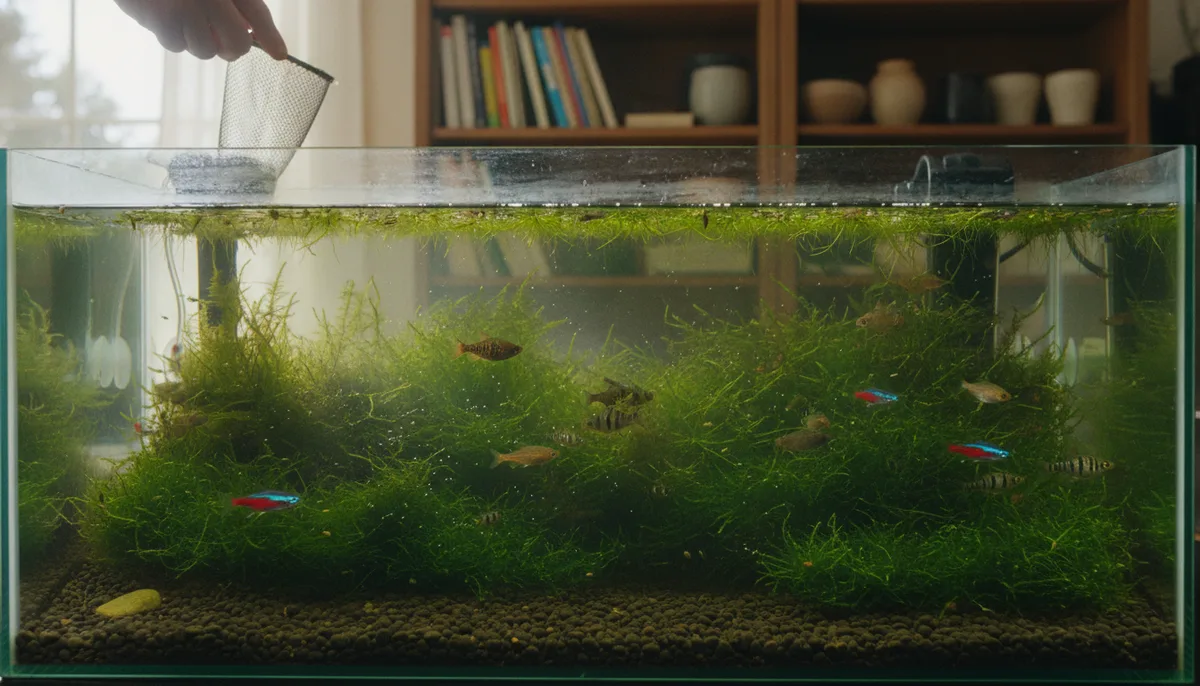
Master the Art of Breeding Egg Scatterers: A Guide for Tetras, Danios, and Barbs
Breeding aquarium fish is a profound passion for many hobbyists, representing the pinnacle of the "Tank Keeper" journey. However, the difficulty level varies wildly across the hobby. While livebearers like guppies seem to multiply if you simply add water, and cichlids are famous for their fierce parental protection, egg scatterers represent one of the most significant hurdles for the home breeder.
Species such as tetras, danios, and barbs are notorious for being "bad parents." They don't build nests, they don't guard their young, and they will happily consume their own offspring seconds after they are laid. To succeed with these species, you must understand their biological drives and create an environment that outsmarts their predatory instincts.
The Biology of the Scatter: How It Works in the Wild
In their natural habitats, egg scatterers rely on a "strength in numbers" strategy. Rather than investing energy into protecting a few young, they release hundreds of eggs across a wide area, hoping that a small percentage will survive by sheer luck and camouflage.
Generally, these fish have a specific spawning season tied to environmental changes, such as the onset of the rainy season. During this time, the male displays his "breeding dress"—a surge in color intensity designed to attract a mate. You can often enhance these colors for your own viewing pleasure by using the Best LED Aquarium Lighting for Planted Tanks: Budget vs. Professional Grade, which brings out the iridescent reds and blues typical of breeding tetras.
The mating ritual is energetic. The male pursues the female relentlessly until she finds a suitable spawning site—usually a dense clump of aquatic plants or submerged roots. They align their bodies, and in a momentary embrace, the female releases her eggs while the male releases his milt. These transparent, fertilized eggs then tumble into the substrate or stick to fine-leaved plants.
Because these eggs are defenseless, evolution has favored a rapid development cycle. Many species hatch within a mere 24 hours. The newborns are nearly invisible, equipped with a yolk sac that provides nourishment for the first 1 to 3 days. By day 5, the yolk is absorbed, and the fry must begin hunting for microscopic prey.
Why Egg Scattering Fails in the Standard Aquarium
The primary reason hobbyists fail to see fry in a community tank is space. In the wild, hundreds of eggs are lost in the "mulm" (organic debris) or hidden in vast thickets of plants. In the glass box of a home aquarium, there is nowhere to hide. Adult fish are opportunistic feeders; to them, a fresh egg is a high-protein snack.
Furthermore, even if an egg survives to hatching, the fry are incredibly small—much smaller than newborn guppies or mollies. They cannot eat crushed flakes or standard pellets. Without a dedicated plan to provide microscopic food, the fry will starve within 48 hours of becoming free-swimming.
To overcome these obstacles, we follow a proven four-step framework for success.
Step 1: Selecting and Conditioning the Right Parents
Success begins with your breeding stock. You need at least one adult male and one adult female that are sexually mature. For many South American species, such as the Neon Tetra or Rummy-nose Tetra, sexual maturity is reached between 7 and 12 months of age.
Sexing Your Fish
Sexing egg scatterers can be subtle. Generally, males are slimmer and more vibrant. In species like the Zebra Danio Care Guide: The Energetic Heart of the Community Aquarium, the males are torpedo-shaped, while females develop a pronounced "bulge" in the abdomen when carrying eggs (gravid).
Interestingly, some tetras—including Diamond and Green Fire tetras—possess "anal fin hooks." These microscopic structures allow the male to literally "velcro" himself to the female during the spawning embrace, ensuring a higher fertilization rate. While you can't see these hooks with the naked eye, you may notice these males getting easily snagged in fine-mesh fish nets.
Conditioning
Before attempting a spawn, "condition" the parents for two weeks. This involves feeding high-quality live or frozen foods like bloodworms, daphnia, and brine shrimp. This extra protein encourages the female to produce a large clutch of healthy eggs.
Step 2: Creating a Safe Zone with Spawning Grates and Mops
Since the parents will eat the eggs, the breeder's job is to separate the two as quickly as possible. There are two primary methods for this:
- The Marble Method: Line the bottom of a dedicated breeding tank with two layers of glass marbles. As the eggs are scattered, they fall between the rounds of the marbles where the adult fish cannot reach them.
- The Mesh Floor: Suspend a plastic mesh or "egg crate" grate a few inches above the bottom of the tank. The fish spawn above the mesh, and the eggs fall through to safety.
Additionally, providing a "target" for the fish to spawn in is helpful. Spawning mops made of synthetic yarn or dense clumps of Java Moss are ideal. If you notice your plants are struggling to provide this cover, ensure you aren't dealing with nutrient issues; for instance, Why Your Aquarium Plants Have Pinholes: The Ultimate Guide to Potassium Deficiency can explain why your natural spawning sites might be deteriorating.
Step 3: Environmental Triggers and the "Rainy Season" Effect
In nature, egg scatterers often spawn when the rains come. This brings cooler water, a drop in barometric pressure, and a surge in food availability. You can mimic this in your home aquarium to "trigger" the spawning behavior.
After conditioning your fish, move the selected pair (or a small group) to the breeding tank in the evening. Perform a 20-25% water change with water that is 2–3 degrees cooler than the tank temperature. This simulates a rainstorm. Many keepers find that the fish will begin spawning the following morning as the first light hits the tank.
Once you observe the spawning ritual—energetic chasing and vibrating against the plants or mop—wait a few hours until the female appears "slimmed down." At this point, remove the adults immediately. In the world of egg scatterers, the parents are the biggest threat to the fry's survival.
Step 4: The Critical First Week of Fry Development
Once the adults are removed, the clock starts. The eggs will hatch quickly, usually within 24 to 48 hours depending on the temperature. At first, you won't see "fish." You will see tiny "slivers" stuck to the glass or resting on the bottom. These are the wigglers, and they are still living off their yolk sacs.
Feeding the Microscopic
The biggest mistake breeders make is feeding too early or too much. Do not feed until the fry are "free-swimming" (usually day 4 or 5). Because they are so small, their first food must be microscopic.
- Infusoria: A liquid culture of microscopic organisms.
- Green Water: Water rich in phytoplankton.
- Specialized Powders: Extremely fine-milled fry food.
After the first week, the fry should be large enough to graduate to newly hatched baby brine shrimp (BBS). Baby brine shrimp are the "gold standard" for fry growth because their jerky swimming motion triggers the fry's hunting instinct, and they are packed with the fats and proteins needed for rapid development.
Maintaining Water Quality for Growing Fry
Fry are highly sensitive to water chemistry. Because you are feeding frequently (3–5 times a day), waste can build up quickly. However, a standard power filter will suck up the tiny fry.
Always use a sponge filter in a breeding tank. Sponge filters provide gentle biological filtration and a surface for the fry to graze on without the risk of them being processed through an impeller. Consistent, small water changes—using airline tubing to siphon waste so you don't accidentally remove fry—are the key to bringing your brood to a size where they can finally join the main community.
Breeding egg scatterers is a test of patience and observation. From the moment you see the male's vibrant breeding dress to the day you see a school of juvenile tetras that you raised yourself, the process is a masterclass in the delicate balance of aquatic life. With the right parents, a protected spawning site, and a plan for micro-foods, you can successfully navigate the challenges of these "bad parents" and grow your aquarium family.