
Sand vs. Gravel Aquarium Substrate: Which is Best for Your First Tank?
Affiliate Disclosure: This post contains affiliate links. If you purchase through these links, The Tank Keeper may earn a small commission at no extra cost to you, helping us continue to provide supportive hobbyist resources.
Choosing the "floor" of your aquarium is one of the most significant decisions you’ll make during your setup. It isn’t just about what looks best in your living room; it’s about creating a safe, functional environment for your aquatic family. If you are feeling a bit overwhelmed by the aisles of bags at the pet store, you aren’t alone.
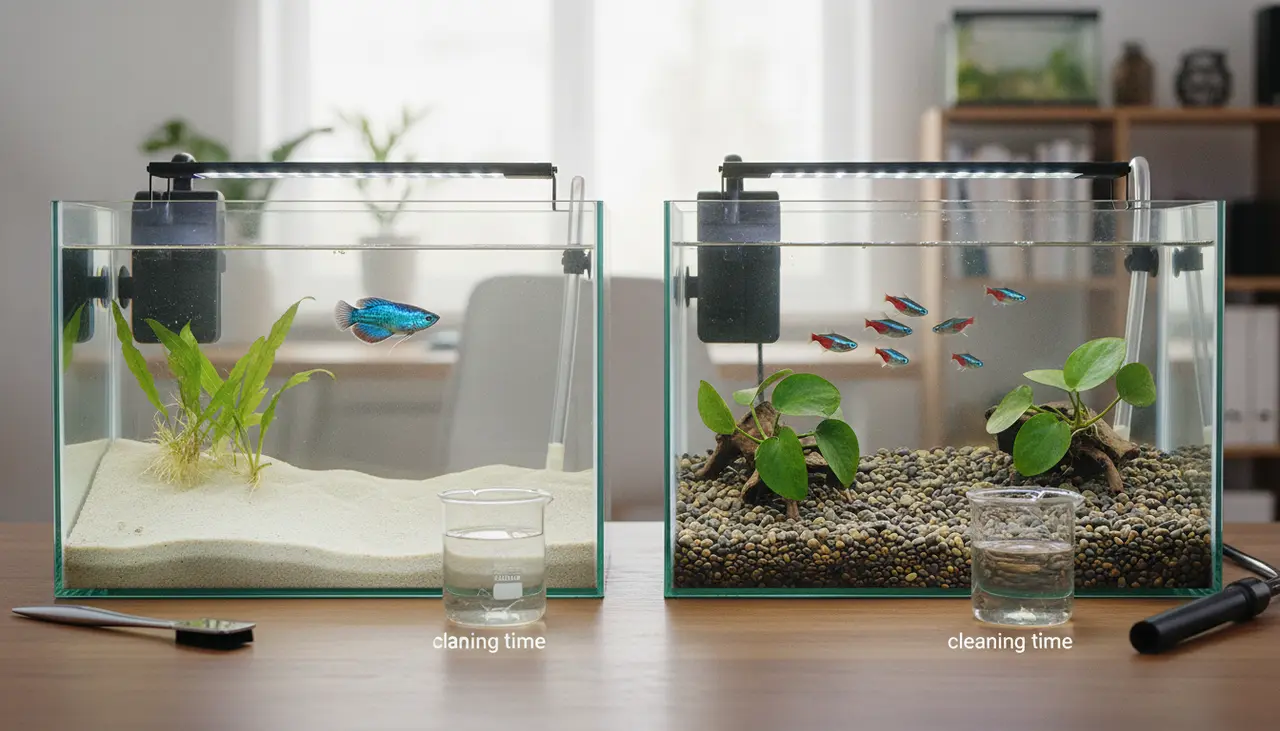
The short answer for most beginners is this: Gravel is generally more forgiving for those who want an easy cleaning routine with a standard gravel vacuum. However, sand is the superior choice if you plan on keeping bottom-dwelling fish with sensitive barbels (like Corydoras) or want a more high-end, natural aesthetic. Your choice should ultimately be dictated by the specific fish you intend to "parent" and how much time you can realistically commit to maintenance.
Who This Guide Is For
This guide is specifically for the home hobbyist who is setting up a new tank or considering a substrate swap. Whether you are balancing a 9-to-5 job or a busy household, we want to help you choose a substrate that doesn't become a source of stress, but rather a foundation for a thriving, peaceful ecosystem.
---
Comparison at a Glance: Sand vs. Gravel
| Feature | Aquarium Gravel | Aquarium Sand | | :--- | :--- | :--- | | Particle Size | 2mm to 5mm+ | 0.5mm to 2mm | | Cleaning Effort | Easy (Deep vacuuming) | Moderate (Surface swirling) | | Plant Growth | Good (Allows water flow to roots) | Excellent for some, but can compact | | Fish Safety | Best for mid-water swimmers | Essential for bottom-dwellers | | Debris Management | Debris falls between cracks | Debris sits on the surface | | Cost | Generally affordable | Varies (Play sand is cheap; specialty is higher) |
---
The Case for Gravel: The Beginner’s Best Friend
Gravel has been the gold standard for home aquariums for decades, and for good reason. It is incredibly user-friendly for those still learning the ropes of the Nitrogen Cycle and tank hygiene.
Why you might love it:
- Easier Maintenance: When you use a siphon, you can push the vacuum tube deep into the gravel. The heavy stones stay down while the "mulm" (fish waste and leftover food) is sucked away.
- Better Water Flow: Because the pieces are large, water can circulate through the substrate. This prevents "dead zones" where harmful gases can build up.
- Color Variety: From natural river stones to vibrant blues and purples, gravel offers the most flexibility for themed decor.
The Trade-off: The biggest downside to gravel is that it acts like a trap. Food and waste fall into the gaps where fish can't reach them. If you skip your weekly maintenance, that trapped waste can lead to ammonia spikes.
The Case for Sand: The Natural Aesthetic
Sand provides a sleek, professional look that mimics the natural riverbeds and lake bottoms of the wild. If you are aiming for a high-end "aquascaped" look, sand is often the way to go.
Why you might love it:
- Fish Health: Many fish love to sift through the substrate for food. For species like Corydoras or Kuhli Loaches, sharp gravel can actually erode their delicate whiskers (barbels). Sand keeps them safe.
- Surface Cleaning: Unlike gravel, waste doesn't sink into sand. It sits right on top. This means you can often "sweep" the surface with your siphon without ever touching the sand itself.
- Root Support: Many rooted plants find it easier to anchor their fine root systems in dense sand.
The Trade-off: Sand can compact over time. If it becomes too packed, "anaerobic pockets" can form—areas without oxygen where toxic hydrogen sulfide gas can build up. You’ll need to occasionally stir the sand or keep "helper" snails (like Malaysian Trumpet Snails) to keep it aerated.
---
Which is "Best For" Your Setup?
- Best for Goldfish: Gravel (Large size). Goldfish are "mouth-funder" fish that pick up substrate and spit it out. Fine sand can sometimes irritate their gills, and small gravel can become a choking hazard. Large, smooth river stones are ideal.
- Best for Planted Tanks: A Mix or Specialized Plant Soil. While both sand and gravel work, serious "plant parents" often use a nutrient-rich base layer topped with sand for aesthetics. Check out The Tank Keeper’s Master Buying Guide: Optimizing Your Home Aquarium Setup for more on specialized plant needs.
- Best for Children’s Bedrooms: Gravel. It’s durable, comes in fun colors, and is much harder to accidentally suck up into the filter during a cleaning mishap.
---
Common Beginner Mistakes to Avoid
- Not Rinsing Enough: Whether you buy sand or gravel, it is dusty. If you don't rinse it in a bucket until the water runs clear, your tank will look like a cloudy mess for days.
- Using "Play Sand" Without Caution: While cheap, some hardware store play sands contain silicates that can trigger massive algae blooms. Always look for "pre-washed" or "aquarium-safe" labels when possible.
- Too Deep a Layer: Aim for 2 to 3 inches. Any deeper, and you increase the risk of those dangerous "dead zones" where oxygen can't reach.
- Sucking Up Sand: When cleaning sand, don't shove the vacuum into the bed. Hover it about an inch above the surface and swirl it to lift the waste.
Maintenance Tips for a Peaceful Home
If you’ve chosen a substrate that requires a bit more care, don't worry. Managing a tank is about rhythm, not perfection. If you find your filter is getting noisy after adding sand, it might be because some grains got into the impeller. Investing in high-quality equipment can mitigate these small hurdles. You can find recommendations for quiet, sand-friendly options in our guide to The Best Quiet Aquarium Filters for a Peaceful Living Room.
---
FAQ: Substrate Basics
Can I mix sand and gravel? You can, but physics usually wins. Over time, the smaller sand particles will settle to the bottom, and the larger gravel will rise to the top. If you want a "mixed" look, it's better to use stones as accents on top of a sand bed.
How often should I vacuum? For most home tanks, a 20-25% water change and substrate vacuum once a week is the "sweet spot" for maintaining a healthy nitrogen cycle and preventing algae.
Does sand break aquarium filters? It can if the intake tube is too low. If you use sand, ensure your filter intake is at least 3-4 inches above the sand line to prevent grains from being sucked into the motor.
Is black sand better than white sand? Aesthetically, black sand makes the colors of your fish "pop" and hides debris better. White sand looks stunningly clean at first but shows every speck of fish waste immediately.
Final Thoughts
Whether you choose the rugged reliability of gravel or the soft elegance of sand, remember that your aquarium is a living, breathing part of your home. Take your time with the setup, rinse your substrate thoroughly, and enjoy the process of building a sanctuary for your aquatic friends. For more help on getting your hardware right from day one, see our Master Buying Guide.