
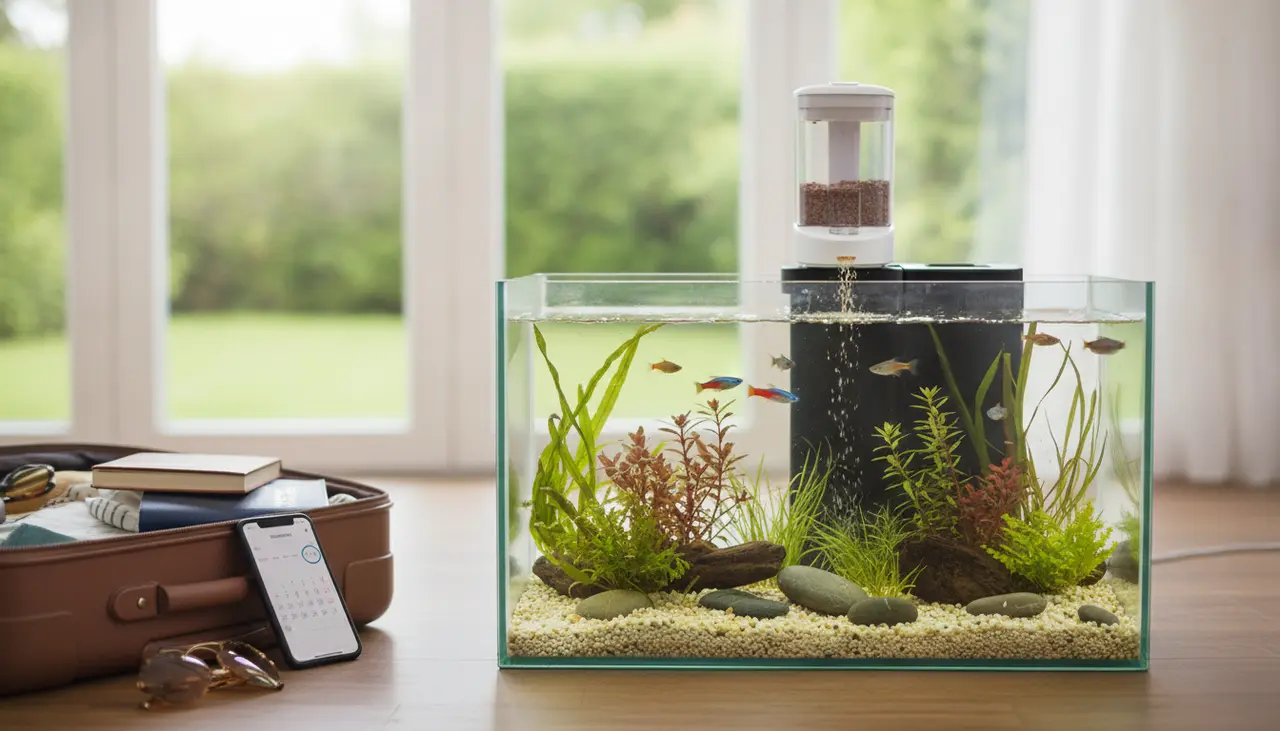
Automatic Fish Feeders: Keeping Your Pets Fed While Traveling
The best automatic fish feeder for most home hobbyists is a reliable, moisture-resistant device that allows for multiple feedings per day with adjustable portion sizes. For standard freshwater and saltwater setups, a drum-style feeder (like the Eheim Everyday Fish Feeder) is highly recommended because it offers a balance of simplicity and reliability. If you have specific feeding requirements, such as small portions of specialized pellets, a "portion-control" style feeder with individual compartments is the safest bet to prevent overfeeding.
Choosing a feeder isn't just about automation; it’s about maintaining the delicate balance of your tank’s nitrogen cycle while you aren't there to monitor it. A high-quality feeder ensures that your fish receive consistent nutrition without the risk of food rotting in the corner of the tank and causing a dangerous ammonia spike.
The Peace of Mind Every "Fish Parent" Deserves
We’ve all felt that pang of "vacation guilt." You’re packing your bags, checking your flight times, and then you look at your tank. Your fish are part of the family, and leaving their well-being to chance—or to a neighbor who might not understand the "pinch, don't pour" rule—is stressful.
This guide is for the dedicated hobbyist who needs a realistic, time-efficient solution for feeding while traveling. Whether you’re heading out for a weekend getaway or a two-week international trip, the right automatic feeder acts as a digital sitter, keeping your pets on their routine so you can enjoy your time away.
Affiliate Disclosure: This post contains affiliate links. If you purchase through these links, The Tank Keeper may earn a small commission at no extra cost to you. We only recommend gear that meets our standards for home aquarium success.
Comparing Top Automatic Fish Feeders
| Feature | Drum-Style (e.g., Eheim) | Compartment-Style (e.g., Fish Mate) | Smart/Wi-Fi Feeders |
|---|---|---|---|
| Best Food Type | Pellets & Flakes | All types (including tablets) | Pellets & Flakes |
| Portion Control | Adjustable slider (approximate) | Fixed individual portions | App-controlled (precise) |
| Moisture Care | Often includes internal fan | Sealed lid design | Varies by model |
| Capacity | Large (weeks of food) | Limited (usually 7-14 meals) | Large (weeks of food) |
| Power Source | Battery | Battery | Plug-in with Battery Backup |
Finding the Right Fit for Your Tank
Best for Proven Reliability: The Drum Feeder
The classic drum-style feeder is the workhorse of the hobby. As the drum rotates, a small door opens, dropping a set amount of food into the water.
- Pros: Generally very affordable, long battery life, and easy to mount on rimmed or rimless tanks.
- Cons: If your tank has high humidity, flakes can occasionally clump near the opening.
- The Tank Keeper Tip: Look for models with an integrated fan or a design that allows for an air stone attachment to keep the food dry and crisp.
Best for Precise Diets: The Compartment Feeder
If you have a "parenting" style that involves specific treats on specific days, or if you have bottom-dwellers that need sinking wafers, compartment feeders are excellent.
- Pros: You pre-load each meal. There is zero risk of the device "dumping" too much food at once.
- Cons: They are bulkier and usually only cover about 14 feedings before needing a refill.
- The Tank Keeper Tip: These are perfect for smaller tanks where even a tiny bit of overfeeding can ruin your water quality.
Best for Tech-Savvy Hobbyists: Smart Wi-Fi Feeders
For those who want to check in from their hotel room, Wi-Fi-enabled feeders allow you to trigger a feeding from your smartphone and receive alerts if the food level is low.
- Pros: Ultimate control; you can skip a feeding if you notice the water looks cloudy via a home camera.
- Cons: Requires a stable internet connection; can be overkill for simple setups.
Integration with Your Maintenance Routine
An automatic feeder is a tool, not a replacement for your presence. To ensure everything goes smoothly, you should integrate the feeder into your Maintenance Routines at least one week before you leave.
Setting up the feeder while you are still home allows you to observe the portion sizes. Are they too big? Too small? Does the food land in the filter intake before the fish can eat it? Adjusting these variables while you're still there to fix them is the secret to a stress-free vacation. For more tips on gear integration, check out The Tank Keeper’s Master Buying Guide: Optimizing Your Home Aquarium Setup.
Common Beginner Mistakes to Avoid
- Setting it up the day you leave: Never do this! Always test your feeder for 3–5 days before your departure to ensure the batteries are fresh and the portion slider hasn't moved.
- Overfilling the hopper: High humidity can cause a full hopper of food to spoil. Only fill what is needed for the duration of your trip.
- Ignoring the "Feeding Ring": If you use flakes, they often float into the overflow or filter. Using a simple floating feeding ring under the feeder keeps the food in one spot so your fish can find it.
- Neglecting a Water Change: Always perform your weekly maintenance and a 25-30% water change a few days before you leave. This ensures your Nitrogen Cycle is stable and the water is pristine before the feeder takes over.
Frequently Asked Questions
Can I use an automatic feeder for frozen food? No. Currently, consumer-grade automatic feeders are designed for dry foods (flakes, pellets, wafers). Frozen food requires refrigeration and manual thawing to prevent spoilage and nutrient loss.
How long do the batteries usually last? Most high-quality feeders like the Eheim or Fluval models will last 3 to 6 months on a set of AA batteries. However, we always recommend putting in a fresh set before a trip longer than a week.
What happens if the power goes out? Most battery-operated feeders will continue to work regardless of a power outage. If you use a Wi-Fi feeder that plugs into the wall, ensure it has a battery backup feature so your fish don't go hungry during a storm.
Will the food get moldy? Moisture is the biggest enemy of automatic feeders. To prevent mold, place the feeder in a well-ventilated area of the tank hood and avoid placing it directly over an air stone or a high-splash area of the filter.
Final Encouragement
You’ve worked hard to create a peaceful, thriving environment for your aquatic life. Using an automatic feeder is a smart, responsible way to protect that investment. By choosing a reliable device and testing it early, you can head out on your next adventure knowing your "wet pets" are well-fed and safe.
If you're just starting your journey and want to ensure your tank is ready for long-term success, remember to how to cycle your first aquarium without the stress before adding automated equipment. Happy fishkeeping!