
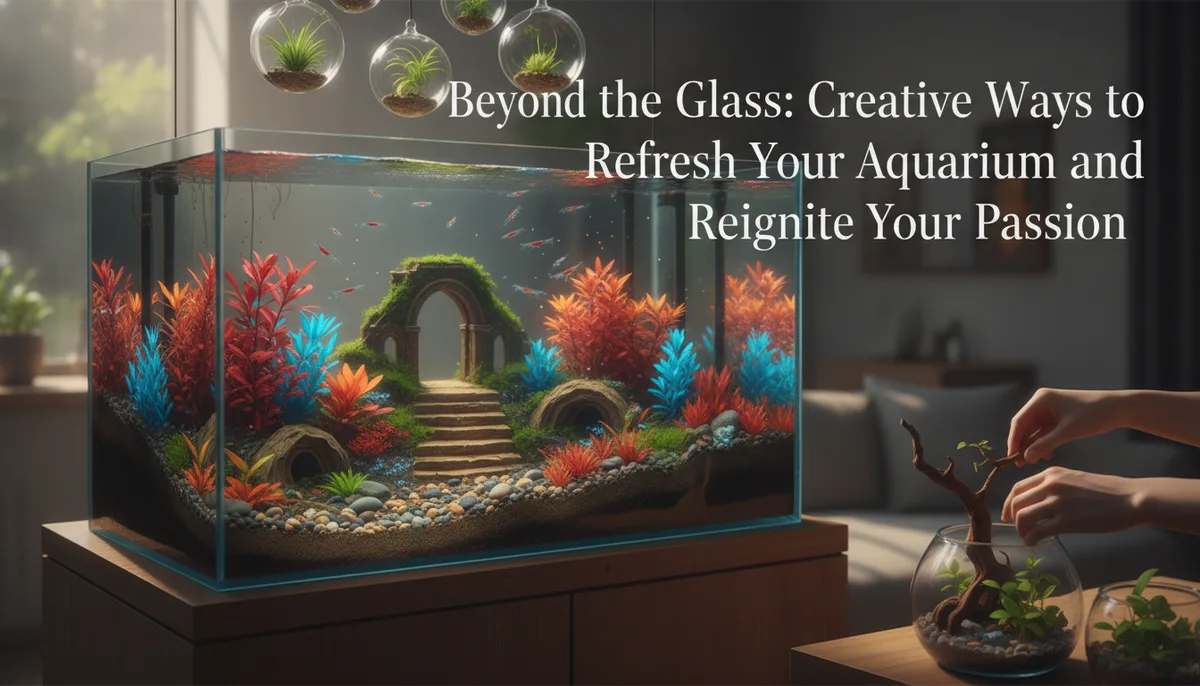
Beyond the Glass: Creative Ways to Refresh Your Aquarium and Reignite Your Passion
---
For many of us, the journey into fishkeeping begins with a single, modest tank. Before long, that one tank turns into three, and eventually, we find ourselves managing a dedicated "fish room." This evolution is fueled by a deep passion for the underwater world, but even the most dedicated hobbyist isn't immune to the occasional plateau.
When you find yourself staring at your aquarium and seeing a chore rather than a sanctuary, you’ve hit the wall of hobbyist burnout. Boredom is the precursor to complacency, and in the world of aquatic life, complacency can lead to neglected maintenance and unhappy inhabitants. However, you don't need to tear everything down and start from scratch to find your spark again. Reinventing your aquatic habitat is often about small, thoughtful shifts in perspective and design.
The Art of the Aquascape Pivot
Aquascaping is more than just "decorating" a tank; it is the intentional arrangement of natural elements to create a balanced ecosystem. If your current setup feels stale, it might be time for an aquascape pivot. Many hobbyists start with a "Nature Style" layout—heavy on driftwood and stones—which looks magnificent in the beginning. Over time, however, wood can decompose, stones can become overgrown with algae, and the original vision can get lost.
Transitioning from Hardscape to Garden
One of the most effective ways to refresh a tank is to remove a dominant piece of hardscape. If you have a large, gnarled piece of driftwood that has lost its luster, removing it creates an immediate vacuum of space. This "negative space" allows you to transition into a "Garden Style" or "Dutch Style" aquascape, where the plants themselves become the structural elements.
By removing the wood, you allow light to reach areas of the substrate that were previously shaded. This is the perfect opportunity to introduce vibrant stems or carpeting plants. When the plants take center stage, the aquarium feels more like a living, breathing landscape that evolves every week.
Refining the Foreground and Midground
If a total hardscape removal feels too drastic, focus on the "layers" of your tank. A common mistake is letting midground plants grow too tall, obscuring the depth of the aquarium. By aggressively pruning or replacing midground species with lower-profile plants, you can restore the sense of perspective.
Elevating the Aesthetic with Live Plants
Plants are the most dynamic component of any aquarium. Unlike fish, which have fixed biological requirements and territorial needs, plants offer a high degree of flexibility. They are the "home décor" of the aquatic world, and changing them can completely alter the mood of the room.
Choosing the Right Species for Your Tech Level
If you are looking for a low-maintenance refresh, consider surface plants. Species like Frogbit or Red Root Floaters provide an instant "jungle" vibe. Their roots dangle gracefully into the water column, providing cover for shy fish and sucking up nitrates with incredible efficiency.
For those willing to put in a bit more effort, carpeting plants can transform a "fine" tank into a "showpiece" tank. While some species require high light and CO2, others are more forgiving.
- Monte Carlo: Offers a lush green carpet and is generally more adaptable than the finicky Dwarf Baby Tears.
- Pygmy Chain Sword: A fantastic alternative for low-tech setups that still want that grassy, meadow-like appearance.
If your plants are struggling to show their best colors, the issue might not be your "green thumb" but your equipment. For a deep dive into how light spectrums affect plant growth, see our guide on the Best LED Aquarium Lighting for Planted Tanks: Budget vs. Professional Grade.
Exploring Biotopes: A Geographic Challenge
If you find yourself uninspired by generic "community tanks," the world of biotopes offers a rewarding intellectual and aesthetic challenge. A biotope replicates a specific slice of nature—a particular river in the Congo, a stream in the Ozarks, or a peat swamp in Borneo.
The Allure of the Blackwater Setup
One of the most popular and visually striking biotopes is the Amazonian blackwater environment. Characterized by tea-colored water, this look is achieved through the use of tannins. Adding dried Catappa leaves, alder cones, or specific types of driftwood releases organic compounds that tint the water and lower the pH.
This environment isn't just about looks; it’s incredibly beneficial for many species of Tetras, Apistogrammas, and Rasboras. The darker water mimics their natural home, making them feel secure and often triggering vibrant spawning colors that you would never see in a crystal-clear, high-light tank.
Breaking the Surface: The Rise of Emersed Growth
Who says an aquarium has to end at the water's surface? One of the most modern trends in the hobby is the integration of emersed plants—plants that have their roots in the water but their foliage in the air. This creates a seamless transition between your aquarium and your home decor.
The Practicality of "Riparium" Plants
Common houseplants like Pothos, Monstera, and Spider Plants are surprisingly adept at growing in an aquarium. You can simply take a cutting, ensure there are no pesticides on it, and secure it to the rim of the tank.
- Nutrient Export: These plants grow much faster than submerged plants because they have access to atmospheric CO2. This means they pull massive amounts of nitrates out of your water, leading to a healthier environment for your fish.
- Visual Impact: A Pothos vine trailing down the side of an aquarium stand softens the hard lines of the tank and makes the entire setup feel like a part of the room’s architecture.
To achieve this look, you may need specialized clips or baskets to keep the stems from falling fully into the water.
Upgrading the Canvas: Hardware and Maintenance
Sometimes, the reason we lose interest in a tank isn't the inhabitants, but the "frame" they are in. An old, scratched tank with a bulky plastic hood can make even the most beautiful aquascape look dated.
The Rimless Revolution
If you are planning a significant refresh, consider upgrading to a rimless aquarium. These tanks use high-clarity, low-iron glass and clear silicone, removing the visual "weight" of traditional plastic frames. A rimless tank turns the water into a floating block of light and color, which is particularly effective for modern home aesthetics. If you’re considering this path, check out our recommendations for the Best Rimless Aquariums for a Modern Home Aesthetic.
Streamlining the "Chore" List
Burnout is often tied to the "work" of the hobby. If water changes and feeding feel like burdens, use your "refresh" phase to automate.
- Automatic Feeders: These can ensure your fish are fed on a consistent schedule, which is vital for their health and your peace of mind. Learn more in our article on Automatic Fish Feeders: Keeping Your Pets Fed While Traveling.
- Reliable Heating: Nothing kills the joy of fishkeeping faster than a hardware failure. If your heater is several years old, replacing it with a trusted classic like the Eheim Jager can prevent future disasters.
Rediscovering the Joy of Observation
The final and perhaps most important way to reinvent your aquarium doesn't involve buying anything at all. It involves changing how you interact with the tank. We often get so caught up in the "keeping" (the cleaning, the testing, the dosing) that we forget the "watching."
Take ten minutes a day to sit in front of your tank with the room lights off and only the aquarium lights on. Watch the hierarchy of your schooling fish, the way your shrimp forage in the moss, and the pearling of your plants. This act of mindfulness is why many of us started the hobby in the first place.
When you view your aquarium as a dynamic, evolving piece of living art rather than a static box of water, the possibilities for reinvention are endless. Whether you’re adding a single Pothos cutting or redesigning an entire Amazonian biotope, every change is an opportunity to learn something new about the natural world.
For a comprehensive look at how to build the perfect foundation for your next project, explore The Tank Keeper’s Master Buying Guide: Optimizing Your Home Aquarium Setup.